

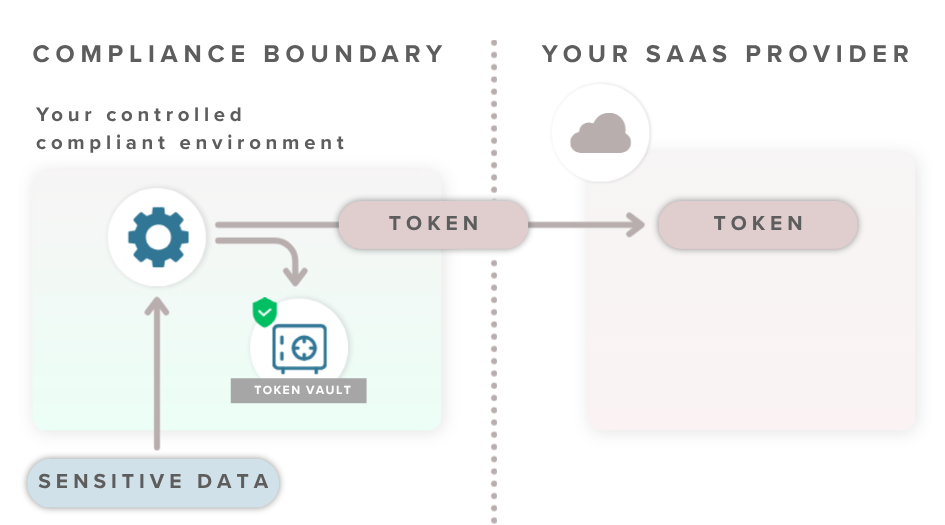
Field-level tokenization can replace regulated data with non-sensitive tokens pre-ingress. The original data never leaves your control or compliance boundary. The absence of the regulated data values from other systems is the compliance mechanism. Most organizations approach compliance by hardening the perimeter around sensitive data. Tokenization does something more efficient: it shrinks the compliance scope.
Why Scope Is the Real Compliance Problem
Regulations like CMMC and ITAR do not just govern what you protect. They govern everything that touches what you protect. Every system, user, vendor, and integration that contacts regulated data falls inside your compliance boundary.
That boundary drives cost. The larger it is, the more controls you implement, the more systems you harden, the more you audit, and the more third-party risk you carry.
Scope reduction is not a shortcut. It is the architecturally correct response to a compliance problem that expands every time you add a system, a vendor, or a user.
What Field-Level Tokenization Actually Does
Tokenization substitutes a sensitive data value, a Social Security number, a health record identifier, a CUI field with a format-preserving token. The token has a format similar to the original data. It passes validation rules. But it carries no exploitable value.
Field-level means this substitution happens at the individual data field, not the record level, application, or whole database.
A database row can contain tokenized fields alongside non-sensitive fields. Applications process the token. Only an authorized, isolated vault can reverse it.
The sensitive value never enters your external application environment. It never transits your internal network in plain text.
The "Field-Level" Advantage
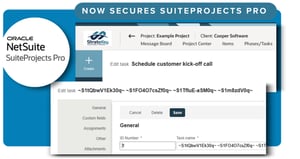
Most organizations don't want to replace the SaaS platforms they've built operations around. They don't have to. Field-level tokenization selectively secures the regulated data value before it reaches the platform, leaving everything else intact. Workflows, integrations, and reporting continue against the token. The sensitive value is removed from the environment.
The Scope Reduction Mechanism Under CMMC and DFARS Requirements
Under CMMC Level 2 organizations handling CUI must implement 110 and NIST SP 800-171 Rev 2 security requirements across every system that processes, stores, or transmits CUI. If a system only handles tokens, it has no contact with CUI. It sits outside that boundary.
The FedRAMP angle matters here too, but not in the way most people frame it. Under DFARS 252.204-7012, any cloud service provider used to store, process, or transmit CUI must be FedRAMP Moderate authorized or demonstrate full equivalency. Many SaaS platforms used in defense and government supply chains are not FedRAMP Moderate authorized.
Tokenization addresses this. If CUI fields are tokenized before data enters a SaaS platform, that platform never processes, stores, or transmits CUI. The DFARS 252.204-7012 cloud requirement does not apply to it. The problem of whether your project management tool, your ERP, or your collaboration platform meets FedRAMP Moderate disappears, because none of those systems ever hold the regulated data.
The boundary is defined by contact with regulated data, not proximity to systems that handle it. A tokenized field is not CUI. The system processing it is not a CUI system.
Note: CMMC Level 2 assessments currently run against NIST SP 800-171 Rev 2 under a DoD class deviation issued May 2024. The proposed FAR CUI Rule, published January 2025, would extend CUI protection requirements across all federal contracts once finalized. Monitor both for updates.
Learn more: StratoKey CMMC Security Controls
Tokenization and ITAR
Under the International Traffic in Arms Regulations, releasing controlled technical data to a foreign person, regardless of where that occurs, constitutes an export requiring authorization. That definition creates real risk in any cloud platform or SaaS tool where offshore personnel, foreign-national employees, or third-party administrators may have access.
The DoD Cloud Computing Security Requirements Guide places ITAR technical data at Impact Level 5, requiring FedRAMP High authorization plus DoD-specific controls and US-person-only access. Most commercial SaaS platforms cannot meet that requirement.
When ITAR technical data fields are tokenized before entering a platform, the controlled data is never present in that environment. The IL5 cloud authorization requirement does not apply.
Learn more: StratoKey ITAR Compliance Controls
The Same Mechanism Supports Data Sovereignty
Data sovereignty requirements are expanding across sectors, especially in the EU. Regulators increasingly require that certain data categories be stored, processed, and controlled within defined jurisdictional boundaries.
Tokenization directly supports sovereignty, keeping the sensitive value to a vault you control, in a jurisdiction you designate. The token travels freely through cloud platforms, APIs, and international workflows. The original data does not move.
A defense contractor running global operations can use international SaaS tooling and support cross-border teams without exposing controlled data to foreign infrastructure. The vault location determines the sovereignty posture. That is an architecture decision, and it needs to be made deliberately.
Learn more: StratoKey Data Sovereignty Controls
The Audit Argument
When a third-party assessor reviews your regulatory boundary, they're asking one question: what touches the regulated data? A well-implemented tokenization architecture lets you answer that question with a short, defensible list. A shorter list means fewer controls to evidence, fewer systems to harden, and a narrower attack surface to defend.
Field-level tokenization is one of the few controls that solves both the risk and the cost of compliance at the same time.
Tokenization with the Cloud Data Protection Gateway
StratoKey's Cloud Data Protection Gateway applies field-level tokenization before regulated data reaches your applications, cloud platforms, or third-party systems. The vault stays under your control. The compliance boundary stays narrow. If you are preparing for a CMMC assessment, managing ITAR obligations across a distributed workforce, or working through data sovereignty requirements in a multi-jurisdiction environment, get in touch.
How Field-Level Data Tokenization Reduces Compliance Scope
Field-level tokenization can replace regulated data with non-sensitive tokens pre-ingress. The original data never leaves your control or compliance..
Why Data Residency Does Not Equal Data Sovereignty
Data sovereignty is the principle that data is subject to the laws of the country where it is collected or processed. Many organizations assume that..