
Cloud service providers have streamlined global operations, improving scalability and cost efficiency. However, this distributed model introduces complex data privacy, residency, and compliance challenges. Some providers address these concerns by offering regional data storage, such as EU-based infrastructure operated by non-EU entities, but physical location alone does not guarantee sovereignty. True sovereignty requires control over access, data encryption, and jurisdiction, not just where the data is stored.
SOLUTIONS
Data Sovereignty
Solution for SaaS
With the advent of SaaS, cloud, and hosted services, data sovereignty issues have become more prevalent. With the distributed architecture of the cloud, where application data resides may not be known to the end user. Cloud and SaaS providers may host data in technically efficient locations or locations that make the most commercial sense. Unfortunately, this location may well not be in the country of residence of the user. The distributed nature of the infrastructure driving these services means that the data hosted may fall under the laws of a foreign government.Learn How StratoKey Can Help Keep Your Data in Region, and Under Your Control
Please provide details so we can best assist you.
Data Sovereignty Cloud Challenges
- Providers can still decrypt data for app logic or support.
- Provider support is often delivered from offshore locations.
- Data copies can move across regions for analytics and backup.
- Subpoenas, third-party processors, or breaches can expose plaintext.
- "Localized Cloud" solutions can still expose data to foreign governments and laws like the CLOUD Act.
Privacy-First Sovereign Data Control
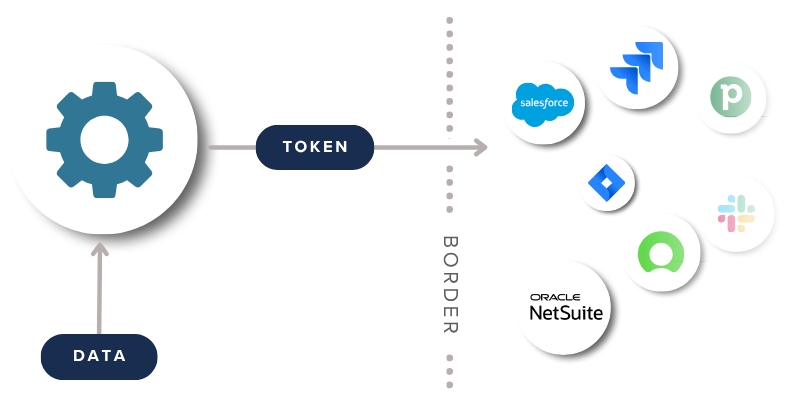
StratoKey’s Cloud Data Protection Platform provides the control required for you to establish true sovereignty through cryptographic separation from your SaaS providers. This means that regardless of their security policies and possible gaps therein, you can take proactive control over the privacy, security and sovereignty of your sensitive data.| Capability | What It Delivers |
|---|---|
| Gateway-based Encryption & Tokenization | End-to-end encrypt or tokenize data before cloud transit so SaaS never receives plaintext. |
| BYOK / HYOK Key Control | Maintain full authority over encryption keys in your region or environment. |
| Compliance-Aligned Storage | Store sensitive data in FedRAMP High or in-region data storage. |
| Audit & Compliance Logs | Generate records for CMMC, ITAR, GDPR, HIPAA, and other regulations. |
Data Sovereignty Considerations
Before diving into solutions, it’s important to understand that data sovereignty extends beyond storage location, it’s about who controls access, jurisdiction, and protection. The following questions highlight the common sovereignty risks organizations face when relying on global SaaS and cloud providers.
Where is your regulated data stored?
Finding out where data is stored is not always obvious for the current generation of cloud and SaaS hosted services. Who makes the decision on the geographical location of your data? Does your service provider have a mandate to request your consent to move your data?
What are the local laws?
With distributed computing such as the cloud, data hosted by SaaS applications can land in unexpected places. Whilst this may keep the costs down, and make access fast, it leaves users' data vulnerable to foreign governments and their associated laws.
What security controls, are in place to secure your sensitive data?
Do local laws stipulate data retention mandates? When you move your data off the hosted service, is there a secure destruction policy? What security controls are in place to protect your data from malicious actors?
Who owns your data?
Organizations may not be aware of the ownership rights over data stored in different sovereign nations. Data that was protected by strong privacy laws, may not be protected in a foreign jurisdiction. This can make legal challenges to data access undefendable.
Is the technical support provided offshore?
Many SaaS companies utilize offshore technical support centers or models that "follow the sun". Support staff may have full access to sensitive data without your consent. This can lead to regulatory violations governing data privacy. A common support model is one that delivers 24/7 support by following the sun. This means support crosses international boundaries into different time-zones (countries) for support delivery that falls outside normal business hours.
Global Compliance and Data Sovereignty
Data sovereignty requirements vary across jurisdictions, but all aim to ensure that sensitive information remains governed and protected under the legal and regulatory framework of its country of origin. StratoKey enables multinational organizations to uphold these obligations by enforcing data control, tokenization, and residency policies across multiple jurisdictions.
- UNITED STATES
- EUROPE
- CANADA
- SINGAPORE
- AUSTRALIA
- UNITED ARAB EMIRATES
-
UNITED STATES
The U.S. enforces data sovereignty through sectoral frameworks rather than a single federal law. FedRAMP, ITAR, and CJIS explicitly require U.S. storage and U.S. citizen access. CMMC, HIPAA, and FISMA impose comparable security, access control, and accountability standards, ensuring regulated data remains protected under U.S. jurisdiction and oversight.
-
EUROPE
GDPR Article 44 and Schrems II mandate that transfers outside the EU occur only to “adequate” jurisdictions or under SCCs, effectively reinforcing sovereignty.
-
CANADA
PIPEDA requires “comparable level of protection” for data transferred abroad. Provinces like BC and Nova Scotia impose mandatory onshore storage for public-sector entities.
-
SINGAPORE
The PDPA allows overseas transfers only where comparable protection exists, using contractual clauses or Binding Corporate Rules. Enforcement has tightened under the Personal Data Protection Commission (PDPC).
-
AUSTRALIA
APP 8 regulates cross-border disclosure, requiring assurance that overseas recipients comply with Australian standards. Proposed Privacy Act reforms (2025) are likely to further strengthen sovereignty provisions.
-
UNITED ARAB EMIRATES
The PDPL aligns with GDPR principles. Cross-border transfers are allowed only to countries deemed to have “adequate protection” by the UAE Data Office or through contractual guarantees. The law applies across the UAE except in DIFC and ADGM, which have their own (GDPR-style) regulations.
Onshore Storage & Encryption for Regulated Data
Using StratoKey’s tokenization technology, data can be securely stored onshore within an organization’s own infrastructure while maintaining functionality in cloud-hosted systems. This ensures sensitive information remains within the organization’s chosen jurisdiction and governance boundary.
Alternatively, end-to-end encryption can be applied to protect data that resides offshore or that might have foreign nationals viewing it (like SaaS employees or support staff). This approach ensures that even if data is hosted or accessed by external providers, only authorized parties within your environment can decrypt it. Offshore administrators or support personnel are unable to view plaintext information without explicit, policy-based authorization from your StratoKey environment.
Privacy of Data
Encrypting or tokenizing (onshoring) ensures your data is always private and no-one except for the users you directly provision via the StratoKey Gateway has access.
Data Storage Location
Retain complete control over where your sensitive data is stored. The database can be hosted either on-premises or in your private cloud environment.
Government Access
Prevent third party governments from accessing your sensitive data. In some countries this restriction is required (EU GDPR since Schrems II) by data privacy law.
Frequently Asked Questions About the Stratokey Data Sovereignty Solution
How is sovereignty different from residency?
Residency defines location; sovereignty defines control. StratoKey enforces both through encryption or tokenization before SaaS ingestion and key control within your region.
Can SaaS providers decrypt my data?
No. Encryption or tokenization occurs via the Gateway before data is transmitted to the cloud provider. Only authorized users can access decrypted or detokenized data meaning the providers employees or integrations have no access to the sensitive data.
What if we operate across multiple regions?
StratoKey supports multi-region operations through configurable access controls, rules and policies. This ensures that data created in one jurisdiction remains stored and governed within that region, while still allowing secure access across your global environment.
Does this impact app performance?
No. StratoKey’s gateway architecture performs encryption and tokenization of selected data with minimal latency, so applications continue to operate normally without affecting user experience or functionality.
Ready to Keep Your Sensitive Data Under Your Complete Custody
Ensure your data stays local, encrypted, compliant and under your control, no matter where your SaaS provider operates. Get in touch to see how gateway-level encryption and tokenization deliver true sovereign control.Learn How StratoKey Can Help Keep Your Data in Region, and Under Your Control
Please provide details so we can best assist you.